The Day I Stopped Judging Other Moms
- posted: Aug. 20, 2025
- Parenting
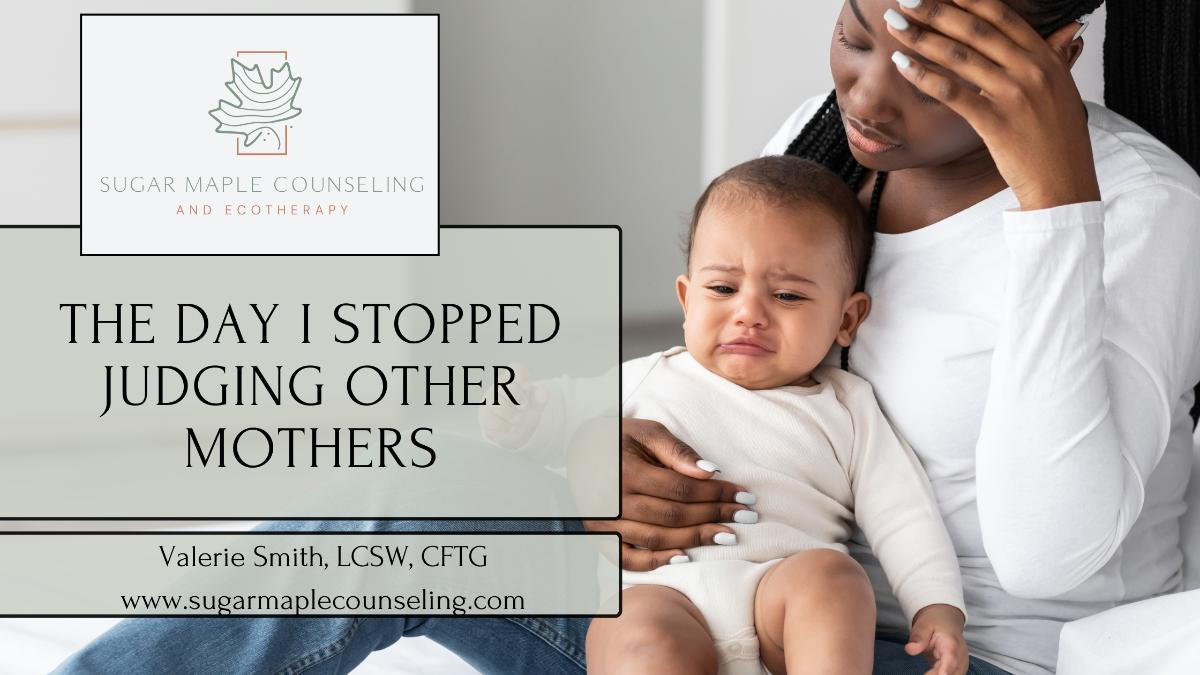
Not long ago, I was in the checkout line at the grocery store when a toddler completely unraveled — crying, kicking, the full meltdown. His mother, cheeks flushed, stayed calm but looked like she was holding it together by a thread. Around me, people sighed and muttered disapproval, as if they could have magically soothed him with a snap of their fingers.
I felt an immediate pang of recognition. I’ve been that mom — the one sweating under the fluorescent lights, praying for the line to move faster while strangers look on, certain they could do better. It’s a lonely feeling, being judged in real time by people who know nothing about your day or your child.
Before I became a mother, I was quick to make assumptions. I thought I understood what “good parenting” looked like. But motherhood stripped me of those illusions almost immediately. Babies do not arrive with instruction manuals. Children are not robots to be programmed. And every family carries a story invisible to outsiders.
Learning Humility the Hard Way
When I first became a mother, I pictured myself serene, endlessly patient, and fully in control. That illusion didn’t last long. Even though people would call my baby “easy” — whatever that label is supposed to mean — I often felt completely out of my depth. Those first weeks were brutal. Colic and reflux turned my tiny newborn into a bundle of pain and tears, and I was powerless to soothe him. I remember the stares in public, the unsolicited advice, and the offhand remarks spoken just loud enough for me to catch, as if I needed more reminders of how little control I actually had.
At first I took it all personally. I felt ashamed, as though their judgment proved I was doing something wrong. Over time, I began to notice how pervasive this culture of criticism is, and not just toward me. At the playground one afternoon, I overheard someone scold a mom under their breath for being on her phone. For all they knew, she might have been answering a work email she couldn’t put off, or finally checking in with a friend after a long day with no break. For her, looking down at the phone while he children played was perhaps the one time of the entire day she had for these tasks.
I realized how easy it is to look at another parent for five seconds and make a snap judgment. I also realized how wrong that instinct usually is.
What Mom-Shaming Really Does
Motherhood is tender and raw, but it’s also a test of endurance. It demands every bit of creativity, strength, and courage you can muster. When people criticize moms, whether outright or in passing glances, it adds a crushing weight to a job that’s already heavy. That weight shows up as shame. And shame doesn’t inspire anyone to do better. It just isolates us.
What makes it harder is that the “villages” parents once had — neighbors, relatives, communities that shared the load — are largely gone. Today, parents are juggling full-time jobs, bills, medical needs, and rising costs while raising kids in a culture that glorifies constant productivity. Some are fighting to get services for children with learning or emotional challenges. Some are buried under financial stress. Many are exhausted.
The internet hasn’t helped. It’s easier than ever to throw criticism at strangers without stopping to understand their circumstances. And when parents absorb those messages — that they’re failing, that they’re not enough — it wears them down. I remember being called a "horrible, terrible mother" by a mother on the internet for admitting I was strongly considering 100% formula-feeding after many failed attempts at breastfeeding.

Choosing Curiosity Instead of Criticism
Somewhere along the way, I decided to stop pretending I understood other people’s lives. Instead of judging, I started asking questions — or at the very least, keeping an open heart. Every parent has a story. Every child has a temperament and needs that outsiders can’t see.
A simple shift of replacing judgment with curiosity can change everything. Asking “What’s it like for you?” invites real conversation. It builds connection rather than creating walls. And it’s far more helpful than giving advice no one asked for.
A Kinder Way Forward
Parenting takes courage, not only to raise a child but to admit that you can’t control everything. It takes strength to face uncertainty and humility to know you’ll make mistakes. Families today are stretched thin by financial pressures, medical costs, and all the unpredictable needs of children. Under those circumstances, the idea of perfect parenting is not only unrealistic: it’s damaging.
The least we can do for one another is to withhold judgment and offer compassion instead. A kind word, a smile in the checkout line, even silent understanding instead of a glare are all small gestures which matter more than we realize.
Everyone is carrying something invisible. Most parents are doing the best they can with the resources they have. What they need is not criticism, but connection. And I’ve learned — often the hard way — that when we lead with kindness and curiosity, everyone wins.
- posted: Aug. 20, 2025
- Parenting
Not long ago, I was in the checkout line at the grocery store when a toddler completely unraveled — crying, kicking, the full meltdown. His mother, cheeks flushed, stayed calm but looked like she was holding it together by a thread. Around me, people sighed and muttered disapproval, as if they could have magically soothed him with a snap of their fingers.
I felt an immediate pang of recognition. I’ve been that mom — the one sweating under the fluorescent lights, praying for the line to move faster while strangers look on, certain they could do better. It’s a lonely feeling, being judged in real time by people who know nothing about your day or your child.
Before I became a mother, I was quick to make assumptions. I thought I understood what “good parenting” looked like. But motherhood stripped me of those illusions almost immediately. Babies do not arrive with instruction manuals. Children are not robots to be programmed. And every family carries a story invisible to outsiders.
Learning Humility the Hard Way
When I first became a mother, I pictured myself serene, endlessly patient, and fully in control. That illusion didn’t last long. Even though people would call my baby “easy” — whatever that label is supposed to mean — I often felt completely out of my depth. Those first weeks were brutal. Colic and reflux turned my tiny newborn into a bundle of pain and tears, and I was powerless to soothe him. I remember the stares in public, the unsolicited advice, and the offhand remarks spoken just loud enough for me to catch, as if I needed more reminders of how little control I actually had.
At first I took it all personally. I felt ashamed, as though their judgment proved I was doing something wrong. Over time, I began to notice how pervasive this culture of criticism is, and not just toward me. At the playground one afternoon, I overheard someone scold a mom under their breath for being on her phone. For all they knew, she might have been answering a work email she couldn’t put off, or finally checking in with a friend after a long day with no break. For her, looking down at the phone while he children played was perhaps the one time of the entire day she had for these tasks.
I realized how easy it is to look at another parent for five seconds and make a snap judgment. I also realized how wrong that instinct usually is.
What Mom-Shaming Really Does
Motherhood is tender and raw, but it’s also a test of endurance. It demands every bit of creativity, strength, and courage you can muster. When people criticize moms, whether outright or in passing glances, it adds a crushing weight to a job that’s already heavy. That weight shows up as shame. And shame doesn’t inspire anyone to do better. It just isolates us.
What makes it harder is that the “villages” parents once had — neighbors, relatives, communities that shared the load — are largely gone. Today, parents are juggling full-time jobs, bills, medical needs, and rising costs while raising kids in a culture that glorifies constant productivity. Some are fighting to get services for children with learning or emotional challenges. Some are buried under financial stress. Many are exhausted.
The internet hasn’t helped. It’s easier than ever to throw criticism at strangers without stopping to understand their circumstances. And when parents absorb those messages — that they’re failing, that they’re not enough — it wears them down. I remember being called a "horrible, terrible mother" by a mother on the internet for admitting I was strongly considering 100% formula-feeding after many failed attempts at breastfeeding.
Choosing Curiosity Instead of Criticism
Somewhere along the way, I decided to stop pretending I understood other people’s lives. Instead of judging, I started asking questions — or at the very least, keeping an open heart. Every parent has a story. Every child has a temperament and needs that outsiders can’t see.
A simple shift of replacing judgment with curiosity can change everything. Asking “What’s it like for you?” invites real conversation. It builds connection rather than creating walls. And it’s far more helpful than giving advice no one asked for.
A Kinder Way Forward
Parenting takes courage, not only to raise a child but to admit that you can’t control everything. It takes strength to face uncertainty and humility to know you’ll make mistakes. Families today are stretched thin by financial pressures, medical costs, and all the unpredictable needs of children. Under those circumstances, the idea of perfect parenting is not only unrealistic: it’s damaging.
The least we can do for one another is to withhold judgment and offer compassion instead. A kind word, a smile in the checkout line, even silent understanding instead of a glare are all small gestures which matter more than we realize.
Everyone is carrying something invisible. Most parents are doing the best they can with the resources they have. What they need is not criticism, but connection. And I’ve learned — often the hard way — that when we lead with kindness and curiosity, everyone wins.
Contact Me

Providing virtual services throughout New York State and in-person forest therapy in the Putnam, Dutchess and Upper Westchester areas